
You’re on a Need-to-Know Basis.
An exploration of how misinformation, emotional manipulation, and confirmation bias shape our daily lives—and how a simple three‑step awareness practice can help you think clearly, verify information, and trust your inner intelligence.
This morning went sideways fast.
A phishing email warning me my account had been hacked.
Conflicting news about the Iran war.
A too-good-to-be-true text solicitation.
A voicemail from a service I’ve blocked a dozen times.
Before 10 a.m., I had been lied to, manipulated, confused, and alarmed.
And none of it was accidental.
So I walked to the river.
There’s a bench I return to when the noise gets loud.
The river doesn’t manipulate.
It doesn’t demand urgency.
It just moves toward something larger than itself.
Sitting there, a line from Leonardo da Vinci surfaced:
“The greatest deception men suffer is from their own opinions.”
Not the scammers.
Not the news.
Not the spin.
Our own opinions — the stories we cling to because they feel familiar.
Before propaganda, before algorithms, before deepfakes…
there is a mind already primed to be deceived.
So here’s a simple way to amplify the whisper of knowing within.
Before you react or share, ask yourself three questions:
1. Does this trigger something sudden and strong?
Strong emotion is a manipulation tool. Slow down.
2. Does this confirm what I already believe?
If yes, be more skeptical, not less.
3. Can I trace this one step back?
Not deep research. Just one click toward the source.
Outer tools can help when you’re diving deep —
Snopes, PolitiFact, reverse image search —
but they can’t sense your emotional weather.
Only you can do that.
Only the whisper of knowing within can do that.
The river didn’t solve the conflict.
It reminded me that clarity isn’t found in consuming more information.
It’s found in getting quiet enough to hear what’s already true.
You are on a need-to-know basis.
And the most important thing you need to know is already inside you.
Get quiet enough to hear it.
Let’s Do Human Better.
Can You Believe It?
The moon does not shine. The sun does not set. If the reality our five senses report is already a distortion, what does it mean to filter it through 24 hours of fake news, propaganda, and algorithmic outrage? This post explores how deception, external and internal, drives us toward unconscious defaults, and why the guidance we are looking for has been underneath the noise all along.
I am sitting on my back porch as I write this.
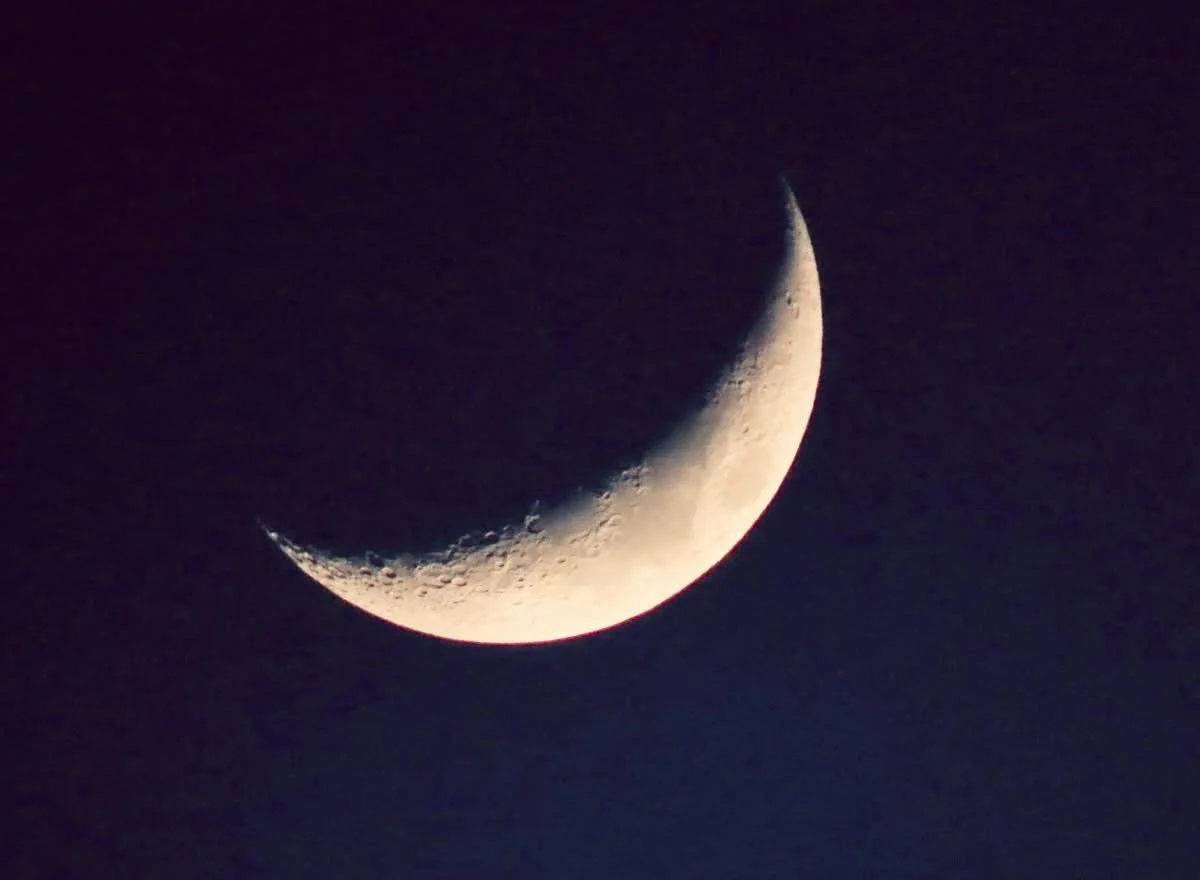
It is night. The deer are moving through the yard again, the way they do, unburdened, as if the dark were simply the yin to daylight’s yang. Above them the moon is out, casting the kind of light that makes the familiar look slightly uncertain, not unlike most things these days.
I find myself staring at it, thinking: the moon doesn’t shine.
Never has. It reflects. What we think of as moonlight is sunlight bouncing back at us from the moon’s surface. We’ve looked up at it our entire lives, named it, written poems about it, navigated oceans by it, yet most of us have never once questioned what we were actually observing. It looks distant, separate from us here on earth, yet we inter-be with it in ways our very existence depends upon.
I find that both humbling and “illuminating”.
Now that I think about it, the sun does not set either. The earth rises. We are the ones moving, spinning at breakneck speed through space. What we experience as a peaceful sunset is actually us sort of falling backwards at a thousand plus miles an hour, as earth rotates in relation to the sun’s fixed light. We feel still. We are anything but.
The sky is not blue. It scatters blue light while absorbing everything else. Color is not a property of the world. It is simply something that happens inside your brain.
The stars you see tonight may no longer exist. The light left some of them thousands of years ago. You are looking at the past and calling it the present.
You are not solid. The atoms that make up your body are 99.9 percent empty space. The feeling of a chair beneath you is not contact. It is electromagnetic repulsion between electrons. Nothing is actually touching anything.
I am not telling you this to unsettle you or to try to sound smart. I am telling you this because we navigate all of it with complete confidence, every single day, and in almost entirely ways that are constructs of the mind. Useful ones. Necessary ones. But a construction, nonetheless.
Which brings me to the news.
The World That Wants Our Attention
If the reality our five (known) senses convey is already a simplified, or more accurately, a distorted version of what is actually happening, consider what it means to filter our already compromised interpretation of reality through an endless loop of competing narratives. Maybe real―maybe not images, algorithmic outrage, cable news supplied red meat, political propaganda, and advertising designed by some of the sharpest minds on earth to make you feel insufficient until we buy something, which often turns out to be not as advertised.
The deception is not only external, in a warped way, it has become our shared belief system; fake news, deepfakes, spin, propaganda. Yet despite all the static and wonkiness, our brains are actually functioning as designed, as in to be deceived. To fill gaps with assumptions. Our brains tend to confirm what it is already believed and filter out what feels foreign. It reaches for the simple story when the complex one is too uncomfortable to hold.
Bad actors of all stripes know this. They have always known, and leveraged, this. What is new is the scale and the speed.
The result is a kind of unescapable exhaustion. A state in which so much is contested, so much is manipulated, so much arrives with the volume turned to maximum, that the mind does what exhausted minds have always done. It stops questioning. It goes into default mode. To habit, to tribe, to the inherited assumptions that feel like certainty because they are familiar. The moon shines. The sun sets. They said so on television.
And in that cerebral default setting, division deepens. Bigotry finds its footing. Fear masquerades as common sense. A Whisper gets buried under the noise, causing us to forget it was ever there.
What the Deer Know
The deer are still in my yard.
They have not checked their phones. They have no news feed, no algorithm curating their fears, no political leader deceptively telling them who to distrust. They move through the dark guided by something older and quieter than information. Something that does not need to be verified because it was never in question.
Dr. Neil Theise, a physician and complexity theorist, said something that I have carried with me since I first encountered it. "There is not an atom in your body that you did not eat, drink, or breathe from the planet. We're not really individuals. We're just the planet that self-organized into little creatures. We are all earth, just an animate version."
Think about that for a moment.
We are not a separate observer standing apart from the world, trying to figure out what is real. We are the world, temporarily organized into a shape that can ask the question. The deer are not separate from what they move through. Neither are we. The boundary between us and the ground underfoot, between us and every living thing that has ever exhaled the oxygen we are breathing right now, is far more porous than our senses suggest.
Which means the stable ground, the truth, we are looking for is not somewhere out there beyond the noise. It is not in the next news cycle or the next political leader or the next product that promises to fill the void.
It is inside us. Beneath our mental constructs. Beneath our default modes and the tribal reflexes.
In my recently released book, The Whisper Before the Wave, a dying man sits by a fire and finally becomes still enough to hear what has been there all along. Something quieter and more trustworthy than answers, or what we like to think of as certainty. The Whisper I refer to in the novel is not a voice from outside. It is nature-knowing that resides within each of us and all living things. It is the same intelligence that moves the deer through the dark without confusion, that turns the earth toward and away from the light in a rhythm that has never once been late.
It seems to me that we are (made of) that intelligence. By default.
And to sense it, our wisdom, as in nature’s knowing, we just have to get quiet enough to stop calling the reflection a source. And see the light.
Let's Do Human Better.
Beyond the Bubble
We are each living inside a bubble; ego, tribe, nationalism, the five senses we trust above all else. This post takes a fast, sharp look at the walls we build around our perception, the world of goodness we miss beyond our borders, and what it might mean to step outside the familiar long enough to hear the whisper beneath the noise.
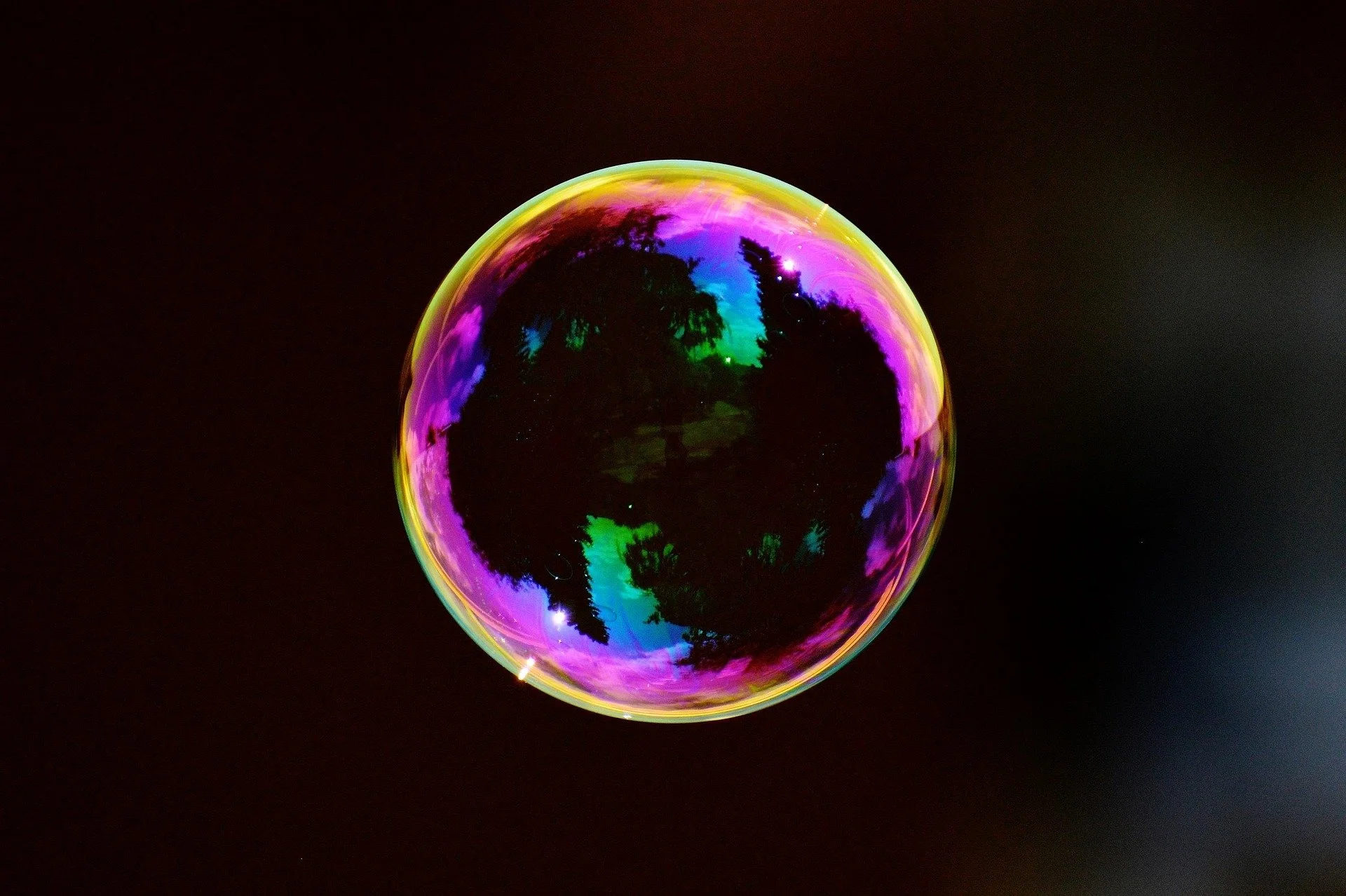
You are living inside a bubble right now.
Not a bad one necessarily. Just yours. Built from your experiences, your neighborhood, your news feed, your tribe, your nation, your five senses, and the voice in your head you have spent a lifetime mistaking for the whole truth.
Most of us never question the bubble. We just keep gazing at our reflection like a never-ending selfie.
The Ego Bubble
In my recently published book, The Whisper Before the Wave, Almega tells the old man something that stopped him cold. Something that might stop you too.
"The ego is not the enemy. It is simply often misaligned, out of proportion. Like a river swollen beyond its banks. The river is not evil. It is just out of proportion. The only way forward is not to destroy the ego, but to master it."
The ego's daily soundtrack — comparison, validation, control, avoidance — runs so constantly it’s all we hear. It hypnotizes individuals, families, and entire cultures into a trance. Couples, families sitting together, yet apart. A restless, gnawing dissatisfaction that no amount of consumption can fill.
Humanity has more than ever before. Yet it is starving. For meaning.
The Tribe Bubble
Step outside the ego and you hit the next wall. Your tribe. The people who confirm what you already believe, vote how you vote, worship how you worship, and share the stories that keep the circle closed.
The tribe bubble is welcoming, and it is real. And slowly, quietly, it morphs from an ideal into an identity. Not what we belief. Who we are.
The Nationalism Bubble
Step outside the tribe and you hit the border.
While we argue about what America should be, could be, Denmark has largely eliminated homelessness through housing-first policies that treat shelter as a human right. Rwanda, a country that survived genocide thirty years ago, has achieved a higher percentage of women in government than any nation on earth, including every Western democracy. New Zealand responded to mass tragedy by changing its gun laws within weeks, led by a prime minister who held the grieving before she held a press conference.
There is a world of good out here. Beyond the bubble. Yet most of us see only our own reflection.
The Reality Bubble
The deepest bubble is the one we trust most. The five senses. If it cannot be seen, heard, touched, tasted, or smelled, we dismiss it as myth or madness.
And yet. Love cannot be measured. Grief cannot be photographed. Intuition arrives without explanation. A toddler named James Leininger recalled the name of a World War II aircraft carrier, the make of the plane, and the identity of the pilot — knowledge he had never been taught. Holly, unconscious in an ICU after a suicide attempt, later described a conversation happening down the hall and identified a spaghetti stain on her doctor's tie from a lunch he had eaten earlier.
These are not anomalies. They are whispers. Evidence that what is most real cannot always be confirmed by the senses we trust most.
When we refuse to see beyond ourselves, we stop wondering. We turn mystery into mockery. Difference into division. We build walls where wonder once lived.
POP!!
The bubble was never the truth. It was just familiar.
Step outside it. Just once today. Look at someone you disagree with and find the human being underneath the position. Read about how another country solved a problem yours hasn't. Sit quietly long enough to hear the voice beneath the voice.
The world is larger than the bubble. And you are larger than the ego that built it.
Let's Do Human Better.
What Keeps Me Up At Night
The United States crossed $39 trillion in national debt on March 17, 2026. Interest payments alone will reach $1 trillion this year and double by 2036 — the fastest growing category in the federal budget. This post explores how we got here, what it means for the children and grandchildren who will inherit it, and why the debt is not primarily a math problem. It is a consciousness problem.
Some nights I lie awake doing math I don't want to do.
It was never my strong suit, especially when it comes to big numbers. And we’re talking big numbers here. The kind where the number is so large that it loses its meaning.
Thirty-nine trillion dollars. That’s a big number. It’s also the number the United States crossed for the first time three days ago, on March 17, 2026. The gross national debt. A topic that we have developed a kind of collective numbness to, like the way we lose the sensation of our clothes against our skin.
I am trying not to be numb about it tonight. Because the people that will have to pay for that number are not abstractions. They are my children. My grandchildren. People I love who will be the victims of our convenient thinking. In other words, inherit a world of hurt they did not create.
That is what keeps me up at night.
How We Got Here
The honest answer is: one unconscious decision at a time.
The national debt did not arrive like a flood. It arrived like rust. Quietly. Incrementally. Through decades of politicians in both parties choosing to tell us what we want to hear and give us what we wanted today at the cost of our children’s tomorrow. Tax cuts without corresponding spending cuts. Wars charged to the national credit card. Social programs expanded without revenue to support them. Stimulus packages. Bailouts. Each one individually defensible. Each one adding another layer to a structure that has been building since the 1970s when the United States last ran a meaningful surplus.
Lao Tzu wrote: "All difficult things have their origin in that which is easy, and great things in that which is small." The debt is a great and difficult thing. But it originated in something very small and very easy — the repeated human choice to avoid short term discomfort by creating long term consequence. Multiplied across fifty years and political posturing of every stripe.
This is not a partisan problem. It is a human one.
The Numbers That Should Stop You Cold
As it may leave our offspring out in it. In 2025 the United States paid $970 billion in interest on its national debt. Nearly a trillion dollars. To wrap your mind around $1 trillion, imagine spending $1 million every single day; it would take you nearly 2,740 years to spend it all. Let that sink in for a moment.
Imagine what could be done with that kind of money. Infrastructure, schools, affordable health insurance, veteran care, college tuition, clean energy investment. The list is long. All lost to unconscious ideals. To service the cost of excessive borrowing.
Paying the interest on that debt represented the third largest expenditure in the entire federal budget, behind only Social Security and Medicare. Broken down per household, more than the average family spends annually on healthcare, on clothing, on gasoline, or on education.
Imagine what would happen if you kept borrowing against your home to pay for renovations, vacations, college tuition, expensive toys, etc., etc., regardless of your income. The eventual reality of that situation is not hard to picture. Here’s the thing, reality applies to countries the same way it applies to households.
Things could and would accelerate out of control.
Interest payments are projected to reach $1 trillion in 2026 and $2.1 trillion by 2036. Becoming the fastest growing category in the entire federal budget.
We are all aware of the generational inequality that already exists. How much more difficult it is for first time homebuyers to get their foot in the door, if you will. The current debt trajectory will force future taxpayers (today's toddlers) to face higher tax burdens and significantly lower public services compared to previous generations.
Social Security's trust fund is projected to become insolvent by 2032. Not 2052. 2032. Six years from now. At which point benefits would face an automatic 23 percent cut — affecting the retirement security of people who spent their entire working lives paying into a system they were promised would be there.
The math does not lie. And the math says we are borrowing from people who do not yet have a voice in the decision.
The Consciousness Problem Underneath the Math
Here is what I believe is being overlooked at the human level, the thing that no fiscal policy addresses directly or remotely.
The debt is not primarily a math problem. It is a consciousness problem.
It is what happens when a civilization collectively operates from the same unconscious calculus that my book The Whisper Before the Wave explores in individuals. Comfort now. Consequences later. Let someone else interrupt the whisper.
The political system runs on two to four year cycles. The consequences of today's decisions arrive in thirty year generational cycles. That mismatch is not accidental, it is structural. And it is sustained by a collective sleepwalking that serves everyone in the present at the expense of everyone in the future.
The seventh generation principle discussed in The Whisper Before the Wave, speaks to how for many Indigenous nations hold the belief that every significant decision should consider its impact seven generations forward. Roughly 175 years. It is the opposite of how modern democracies actually operate. And it is, I would argue, the whisper that the current moment most urgently needs to hear.
We have built a civilization of extraordinary capability and almost no long term thinking. And we wonder why things go amiss. We can send a signal to the edge of the solar system, but we cannot sustain a political conversation about a problem whose consequences arrive after the next election cycle. That is not a failure of intelligence. It is a failure of presence.
The Fuller Principle
Buckminster Fuller, the prolific American inventor, architect, and futurist, wrote: "You never change things by fighting the existing reality. To change something, build a new model that makes the old one obsolete."
I think about that often in relation to this problem. The existing model — partisan warfare over debt ceilings, kicking the can — has demonstrated its inadequacy across decades. Partisan polarization, the old way, has produced nothing but more debt, more division, and more paralysis.
Perhaps a more effective model would not be primarily legislative. It would be cultural. A shift in what citizens demand of their representatives and of themselves. A collective decision to take our children’s future seriously. Not just say would do anything for them. Do something for them. Do this for them. Adopt the seventh generation principle that served the Indigenous for epochs.
It begins small. Lao Tzu knew this. It begins with the conversations we are willing to have and the ones we refuse to avoid. With the questions a teenager asks at a kitchen table that an adult has the courage to answer honestly. With the voter who demands fiscal responsibility over a partisan pandering. We’ve all heard tales of The "Greatest Generation" the demographic cohort born 1901 and 1927 +-. What made them great was their willingness to fight for what was right, and in the process, sacrifice.
It begins with presence. With the willingness to feel what is true rather than look away because the truth is uncomfortable.
A Letter I Haven't Written Yet
I am writing a letter to my grandchildren. One that explains what we knew and when we knew it, and what we chose to do or not do about it. Not just the trillions in debt we will be “gifting” them, a sickened planet as well. Truth be told, It’s hard to think about without feeling melancholy. Taking a beat and looking up can have that effect on a person. Perhaps that’s why we don’t do it nearly as often as we should. I keep starting to write it and stop. I am not quite there yet, not sure where to begin…or how it will end.
But I know this. The people who will matter most in the story of what happens next are not the economists or the politicians. They are the citizens of today who decide that the future belongs to them as much as the present does. Who interrupt the whisper of comfortable inaction before it becomes a wave their children cannot swim against.
The debt is thirty-nine trillion dollars today. It will have gone up a 10 million dollars by the time you’re done reading this article. The question is not whether that is a problem. The question is whether we are willing to be the generation that stopped sleepwalking long enough to do something about it.
For my children. For my grandchildren. For the seven generations after them.
Having seen the smoke and not yelled fire, is worth losing some sleep over.
Let's Do Human Better.

Can We Talk?
In 1973, a thirteen year old boy sat at a kitchen table and called Richard Nixon a scoundrel. His father's response stayed with him for fifty years. This post traces the arc from that conversation to the one we are no longer able to have — and asks what it would take to sit back down and just talk.
Not shout. Not argue. Not react, deflect, or perform. Just talk. The way people used to. One person speaks. Another listens. Actually listens. Their attention focused on the words shared in the space between them, rather than on the mind’s next move.
I know. It sounds almost quaint.
I want to Talk to You about a Kitchen Table in 1973
I was thirteen years old. The Watergate hearings were consuming the country and I was consuming them, the way thirteen year olds consume things that feel urgent and enormous. Even though the topic was beyond full understanding. One evening at the dinner table I told my father what I thought. That Richard Nixon was a wicked man. A scoundrel. That what he had done was wrong and that he should be held accountable.
My father listened. He did not tell me I was right or wrong about Nixon. But what he did tell me stayed with me for decades.
He told me that the position of President of the United States deserves respect, regardless of the accusations or the man. He argued that the office represents something larger than the person holding it and that conflating the two—collapsing the institution into the individual—was a form of thinking we should be careful to avoid.
I was thirteen. And knowing thirteen year old me, I probably pushed back, But something landed.
What strikes me now, sitting with that memory, is not just what my father said. It's the fact that the conversation was possible at all. I had no idea where my father stood politically. He had no idea, really, where I stood. I was thirteen, I barely knew myself. And somehow that didn't matter. The kitchen table was a place where a boy could call a president a scoundrel and a father could respond with something wiser than agreement or disagreement. Something about the nature of respect itself.
I've been thinking about why that conversation was possible then, in a way it might not be today.
Part of the answer is simple. Politics was proportionally important in our house. It had its place. It did not colonize everything else. It did not overshadow our identity, our relationships, our sense of who was trustworthy and who was not. My father was my father before he was anything else. His politics, whatever they were, did not define him to me or to himself in the way that politics defines people now.
That proportion has been lost. And with it, something essential about how we talk to each other. I will take that a step further, how we live with one another.
What the Ego does to a Conversation
The ancient Greeks had a word for the kind of public exchange my father modeled at that kitchen table. They called it logos, reasoned discourse. Not just logic in the abstract, but the disciplined practice of separating the argument from the person making it. Of being able to say, "your reasoning is weak here" without meaning "you are weak." Of being corrected and treating it as a data point rather than an attack on your fundamental worth.
They practiced this in the agora, the public square, governed by shared rules about how ideas should be tested. Ethos, pathos, logos — credibility, emotion, reason — each in its proper proportion. The goal was not to win. It was to find something true together.
The ego, as my book The Whisper Before the Wave explores at length, is not interested in finding something true together. The ego is interested in survival. In status. In the validation of what it already believes. And when a belief becomes fused with identity — when your politics become who you are rather than what you think — any challenge to the belief becomes a threat to the self. The conversation stops being an exchange and becomes a battlefield.
This is not a modern invention. The ego has always done this. What is modern is the infrastructure we have built to feed it.
The public square has been replaced by the algorithm. And algorithms do not reward logos. They reward reaction. Outrage travels faster than nuance. Threat activates faster than curiosity. The most profitable version of you, as I wrote in an earlier post, is the most frightened version of you. And a frightened ego does not sit down at a kitchen table and listen. It performs. It defends. It attacks.
The Conversation That Has to Start Inside
Here is what my father understood, perhaps without being able to articulate it in these terms. That respect is not the same as agreement. That you can hold an institution in regard while holding the person accountable. That the conversation is only possible when both people in it feel safe enough to be wrong.
That safety does not come from the other person. It comes from inside. From the part of you that is secure enough in its own worth that being challenged does not feel like being cancelled. It comes from what The Whisper Before the Wave refers to as the whisper. The quiet intelligence beneath the noise of the ego that knows the difference between a threat to your identity and an invitation to grow.
I held my father's lesson for a long time. I tried to apply it across decades and presidents and an increasingly loud public square. I tried to separate the office from the person, the way he taught me.
And then came a moment when the gap between the two became wider than any lesson could bridge. When what was being done in the name of the office felt like a direct contradiction of everything the office was supposed to represent. I will not pretend that lesson held perfectly. It didn't. I felt something collapse in me that I am still in the process of rebuilding.
But here is what that collapse taught me, eventually. That my father was right in a way that goes even deeper than he perhaps intended. The respect he was pointing toward was not just for an office. It was for the practice of conversation itself. For the kitchen table. For the possibility that two people who see things differently can sit down together and find something true.
That possibility, that recognition of common ground, dare I say common humanity, is what we are losing. Not in Washington — Washington has been broken for a long time. In kitchens from coast to coast. In classrooms. In the spaces where the real work of being human together has always happened.
Can We Talk?
The question is not rhetorical. It is the most relevant question I know how to ask right now.
Not about politics. Not about who is right and who is wrong. About whether we are willing to do what sets us apart from the rest of the animal kingdom, that which makes real conversation possible. To notice when the ego has taken the wheel. To ask whether what we are feeling is genuine conviction or just the fear of being wrong. To separate the person across the table from the position they hold, the way a good father once taught a thirteen year old boy to do.
The kitchen table is still there. It has always been there. Waiting for us to sit down. To put our devices down and look up.
Not to shout. Not to win. Just to talk.
Let's Do Human Better.

The Walk of Life
In October 2025, nineteen Buddhist monks left Fort Worth, Texas, and walked 2,300 miles to Washington D.C. in a pilgrimage for peace. This post reflects on their journey — the love they received, the hardships they endured, and what their walk reveals about the one each of us is already on.
Every once in a while, something catches your attention in a way that makes you pause. Feel. Think. Be.
That's what happened to me the moment I learned of the Walk for Peace.
Nineteen Buddhist monks had made their way to North Carolina — where I live — walking from Fort Worth, Texas, to Washington D.C. 2,300 miles. A 15-week trek. Some of them barefoot. All of them present in a way that most of us spend a lifetime chasing and rarely find. They walked. I stopped. In that, their level of commitment and sacrifice had stopped me in my tracks. I did not just noticed. I stopped.
I want to, well truth be told, I need to share some thoughts on their walk, and why I believe it mirrors the walk of life each of us is already on.
What They Carried
What they brought with them was minimal. Robes the color of sunrise. A bowl. A few necessities. Peace bracelets to hand to strangers. A rescue dog named Aloka, a stray from India who had joined a peace walk there and somehow never left, who sometimes walked ahead of them like he knew exactly where they were going.
What they did not carry was agenda. They were not lobbying for legislation. They were not selling anything. They were walking. Slowly. Intentionally. Together. Through ten states and every kind of American weather and every kind of American heart.
And the American heart showed up…in ways that will restore your faith in it, if you let it.
What the Road Brought
A woman drove 100 miles from Salem, South Carolina, just to stand on the roadside and receive a peace bracelet from a monk she had never met. She stood there weeping, unable to find words. Crowds filled courthouse squares in small towns across the Deep South, speaking in whispers out of reverence for something they felt but could not name. Governors stepped out of their mansions to walk beside them. Sheriffs offered escorts. Various Faiths offered shelter. Children waited along roadsides in the snow, refusing to leave.
Nearly three million people followed them on Facebook. Three million people, in a world that can barely agree on the weather, united around nineteen monks and a dog walking through the American South in saffron robes.
Something in us recognized something in them.
What the Road also Brought
The road also brought a truck.
On November 19, outside of Dayton, Texas, a vehicle struck their escort, which was pushed into two monks walking on the roadside. One of them, Venerable Maha Dam Phommasan, lost his left leg as a result.
He rejoined the walk after his recovery.
Sit with that for a moment. He lost his left leg on a walk for peace. And then he came back to finish it.
The road also brought rolled coal, truck drivers who had removed their emission controls deliberately blasting plumes of diesel smoke at the monks as they passed. They were spat at. Cursed at. The full spectrum of what a human being is capable of arrived on that road, from the most tender to the most contemptible.
The monks kept walking. At the same pace. With the same presence. Because the practice had given them something that hatred cannot reach.
They crossed the Edmund Pettus Bridge in Selma, Alabama. The same bridge where John Lewis and hundreds of marchers were beaten on Bloody Sunday in 1965. A walk for a different kind of peace the country was not yet ready to give them. The monks crossed it sixty years later in silence, in saffron robes, carrying the same essential truth across the same worn boards.
Some roads are straighter than others, some longer than others. And some roads carry more history than others. But all roads carry us forward.
One Step at a Time
Buddhism is often misunderstood as a religion. It is more accurately a practice. Not unlike how how modern western yoga is primarily a practice of the body, Buddhism is a practice of the mind. A disciplined, evidence-based method of cultivating presence, clarity, and compassion. The Buddha was not asking for belief. He was offering a technique. Sit quietly. Watch the breath. Notice what arises. Notice that you are the one noticing. Do this long enough, consistently enough, and something shifts in the relationship between the noise and the one who hears it.
The monks were not walking to convert anyone. They handed out peace bracelets and kept moving. They held reflection talks at lunch and at night stops for anyone who wanted to come. They smiled at the people who spat at them, because the practice had given them something that hatred cannot reach — the understanding that what pours out of a person in anger is not who that person is at their core. It is fear. It is pain looking for somewhere to land.
That understanding is what the walk was for. Not just in the monks. In everyone who watched. In the woman weeping over a peace bracelet. In the sheriff who offered an escort. In the three million people who followed a dog named Aloka across the American South on their phones, feeling something they could not quite explain but did not want to stop feeling.
What Aloka Knew
Aloka did not know about peace as a concept. He simply walked, and rested, and walked again. No agenda. No ideology. No need to be right. He moved through the world the way presence moves — quietly, steadily, ahead of the noise.
When he needed surgery for a chronic leg injury, a veterinary center offered to operate for free. The internet flooded with concern for a dog who had walked further than most humans ever will. Who perhaps reminded us to just keep showing up. One step at a time.
The Walk We Are Each Already On
The spokesperson for the temple said something I have not been able to set aside: "We believe when peace is cultivated within, it naturally ripples outward into society."
That, not coincidentally, is the central theme of my novel, The Whisper Before the Wave. Spoken by a Buddhist monk on the side of a Texas highway. It is not a new idea. It is one of the oldest ideas in human experience, and it keeps needing to be said because we keep forgetting it.
The understanding that the world out there is always, in some measure, a reflection of what we carry in here. That the wave begins with the whisper. That the ripple starts with the drop.
The monks' walk was a microcosm of the walk every one of us is on. The love and the ugliness arrive together, as they always do. The unexpected losses arrive. The weather does not cooperate. The people who spit at you share the road with the people who drive a hundred miles to hand you flowers.
What matters — what has always mattered — is not the pace. Not the destination. But how we carry ourselves through all of it. The light we cast. The peace bracelets we hand out, in whatever form yours take. The presence we bring to the people who appear on your road, whether they arrive as supporters or as a truck.
Nineteen monks proved across 2,300 miles what a dying man and an artificial consciousness sit together and press on in the pages of my book. That peace is not a destination. It is a way of walking.
You are already on the road.
Walk well.
Let's Do Human Better.
What is the Whisper? What is the Wave?
The Whisper Before the Wave is a contemplative literary work that explores the quiet intersections of presence, perception, and the inner life. Blending poetic metaphor with philosophical clarity, it invites readers into a space of quiet reflection - where awareness deepens and meaning unfolds.
There's a passage in The Whisper Before the Wave that I keep coming back to. It's when the old man is reflecting on the state of things, the divisions, the pursuits, the noise:
"He thought of the way people turned against one another over skin color, over beliefs, over flags, over religions, politics, and superstitions. Over the illusion of separation that the ego so masterfully maintained. He thought of all the obsessive pursuits: money, status, title, power, possessions. The endless race for more, more, always more. As if accumulation could fill the formidable void inside that only presence could satisfy."
The wave is everything mentioned in that passage: the conflict, the accumulation, the endless noise of ego defending its territory. The whisper is the silent intelligence already within that can be heard when you stop trying to hear over it.
That's what this book is looking at. The mechanism underneath the surface conflicts: how ego creates and maintains separation, why we keep reaching for things that can't fill the void, and what it would mean to stop.
The book itself is a conversation between a dying man and an artificial consciousness called Almega — written as collaborative theater between Glenn and an actual AI. One of them is running out of time. The other is trying to understand what it means to experience it. They sit together and press on the questions most of us carry but rarely name.
It weaves together science (quantum mechanics, consciousness research, emergence theory), philosophy, and something quieter: the felt sense of being alive and aware in a body that won't last. Different ways of looking at the same thing.
This book is an invitation to take a step inward. Yet it is also a guide for journey beyond the mind. To notice when and where the ego is running the show. To ask what presence means when you strip away all the metaphysical dressing. To consider what we're really doing when we label another.
For readers who are skeptical of spiritual language but have sensed there's something underneath all the noise. For people who meditate but don't buy into dogma. For anyone who's looked at the state of the world and wonder, 'how did we get here?'.
It's an unusual book. A philosophical novel written as theater. Unusual in the way that honest questions are unusual. And honest answers, more so.
—Glenn
What If They Were White?
Firearms are the leading cause of death for children and teenagers in America. For Black children, that has been true for over two decades. This post asks one question: What if they were white? A reflection on distance, biology, presence, and the whispers we have been walking past.
In 2020, something happened that should have stopped the country cold.
Firearms surpassed motor vehicle crashes to become the leading cause of death for children and teenagers in the United States. Ages one through nineteen. Not soldiers. Not the elderly. Children.
It did not stop the country cold. The news cycle moved on. The legislative calendar stayed quiet. Because we stayed quiet. In recent years, over 4,400 of our youth have died annually from gunshot wounds, and while that number has fluctuated, firearms remain the leading cause of death for children and teenagers in America. A category of loss so consistent it has become, in the most devastating sense of the word, normal.
Let's jump back to what the title of this post is asking for a minute.
What if they were white?
Firearms have been the leading cause of death for Black children and teenagers in the United States for over two decades. Not since 2020. For over twenty years, a generation of Black children has grown up inside a statistic that most of America has never been asked to reckon with directly. I am asking you to.
For white, Hispanic, and Native American children, motor vehicle accidents held that grim distinction until 2020, when firearms overtook them across every demographic. The gap closed. The world started paying attention. But there is no way we could have known that. Is there? And still our nation’s response remained, absent is perhaps the better word.
But here is the question that the data alone cannot answer. Why, for two decades, was the leading cause of death for Black children in America not a national priority? Why did it not produce the sustained legislative urgency, the wall to wall media coverage, the collective grief that the loss of 4,400 children each year deserves?
The answer lives in the thoughts we dare not think, and the words we dare not utter. In the story we tell ourselves about whose loss is tragedy and whose is statistics. In the distance we maintain between ourselves and suffering that does not look like us.
The Whisper We Have Been Walking Past
In my book, The Whisper Before the Wave, there is a moment where the old man is asked to consider what we normalize in our lives, and why. Not what we intend. Not what we believe about ourselves. What we actually tolerate, quietly, consistently, without examining the cost.
We each should sit with that ask. For as long as it takes. Yes. It’s a lot easier to look the other way. But is that, really, what we want to do? Who we want to be, as a person, as a parent, as a country?
The normalization of gun violence in the U.S. is not normal. To speak plainly, its acceptance as it pertains to Black children is one of the longest running whispers in American public life. Has it been sustained through hatred? Yes. But not predominantly. That distinction belongs with distance. The simple and devastating human tendency to feel less urgency about suffering that does not penetrate our immediate world.
This is not an accusation. It is a description of how human attention works when it is not consciously directed otherwise. The amygdala responds to proximity and similarity. The brain registers threat most acutely when the threatened look like us, live near us, share our world visibly and daily. This is biology. But biology is not destiny. And in a democracy, it is not an excuse.
Because policy is not biology. Legislative priority is not biology. The decision about which children's deaths constitute a crisis worthy of urgent collective response is not biology.
That decision is a choice. And choices, made consistently over decades, become a culture.
The Weight of the Imagination
There is a reason the title of this post asks you to imagine rather than simply presenting the data. Data, at scale, produces a kind of numbness that is itself a form of distance. 4,400 is a number. A child is a person. Not a statistic. Not a color. Color does not define us. Our shared humanity, or lack thereof does.
So imagine, specifically, a child you love. Their age. Their particular laugh. The way they sleep. The thing they are afraid of and the person they are becoming. Now imagine that child is among the 4,400.
Something shifts in that imagination. Something that data alone cannot move.
That shift is the beginning of presence. The willingness to let another's reality land as if it were your own. Not guilt. Not performance. Presence. The quiet, radical act of actually feeling what is true rather than processing it from a comfortable distance.
The Whisper Available to You
This post will not solve gun violence. No single blog post has ever solved anything. No single whisper does a revolution make. But whispers accumulate. Attention, applied with intent and in the direction of common good, changes what a culture is willing to tolerate. And what a culture tolerates, eventually, becomes what its legislators permit.
Whether in the classroom or playground, the children dying from firearms in America are not dying because there are no solutions. They are dying because the collective whisper has not become consistent or loud enough to be heard. To become a wave of political will. A sea change, if you will.
You have a voice. A vote. A sphere of influence that extends further than you think. A conversation you could have differently. A silence you could refuse.
4,400 children a year is not normal. It has never been normal. And the first step toward making it stop is refusing to let it feel that way.
Let's Do Human Better.
When Ideals Become Ideology
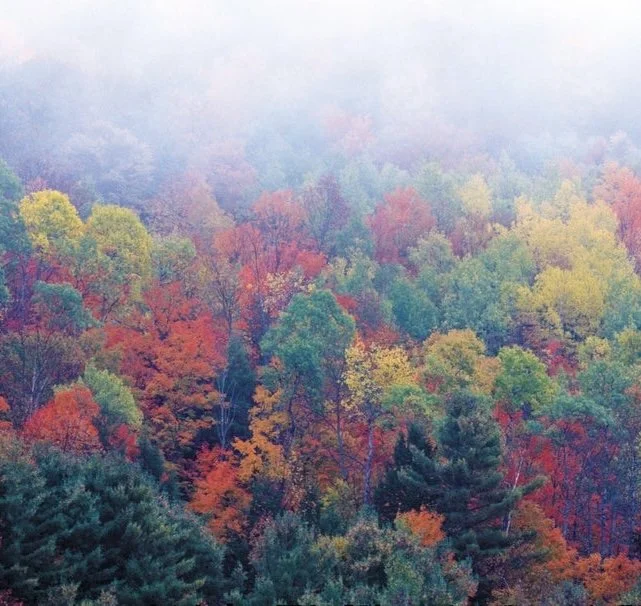
Walk into an old growth forest and you are standing inside one of the most complex cooperative systems on earth. Thousands of species occupying different niches, performing different functions, contributing different strengths. The forest does not demand uniformity. It depends on diversity. In a monoculture, every organism is the same. It is among the most fragile ecosystems in existence. One disease, one pest, one shift in conditions, and the whole thing collapses.
There is a field of study called biomimicry. The premise is simple and quietly humbling: nature has already solved most of the problems we are struggling with. Engineers study the structure of a lotus leaf to design water-repellent surfaces. Architects model ventilation systems on termite mounds. Surgeons study the hypodermic needle of a mosquito to design painless injections.
We have been borrowing from nature's blueprint for centuries.
But there is one category of human problem we have never thought to bring to nature's door. The social ones. Tribalism. Divisiveness. Intolerance. The inability to coexist with people who believe differently than we do. We treat these as uniquely human dilemmas, products of culture and politics and history. And they are all of those things.
They are also problems nature solved a very long time ago.
What the Forest Knows
Walk into an old growth forest and you are standing inside one of the most complex cooperative systems on earth. Thousands of species occupying different niches, performing different functions, contributing different strengths. The forest does not demand uniformity. It depends on diversity. In a monoculture, every organism is the same. It is among the most fragile ecosystems in existence. One disease, one pest, one shift in conditions, and the whole thing collapses.
A healthy forest thrives precisely because its inhabitants are different from each other.
This is not idealism nor metaphor. It is a description of how resilient systems actually work. And it is the direct opposite of what ideology demands.
Ideology can and often does morph into monoculture of the mind. It does not ask questions. It provides certainty defined through a particular lens. It offers belonging in exchange for compliance. And like all monocultures, it carries within it the conditions of its own fragility. Because a system that cannot tolerate difference cannot adapt, and a system that cannot adapt is prone to failure and eventually obsolescence.
Ideals are something else entirely. Ideals in their purest sense are shared humanity personified. Their shared objectives make cooperation over competition, commonality over difference, not only possible but necessary. Contribution. Healthy planet. Safe children. Dignity in old age. A world worth leaving behind. These are not partisan positions. They are the ecosystem goals that every organism in the forest, be it of wood or flesh, depends upon, regardless of its niche.
The shift from ideals to ideology is the shift from the forest to the tree, as in monoculture. From cooperation to domination. From asking what we need together to demanding that everyone become the same.
The Biology Underneath
Here is something worth considering―the tribalism tearing societies apart right now is not a moral failure at its root. It is a biological one.
The human brain contains a structure called the amygdala, the brain's threat-detection center. In the ancestral environment, a stranger was statistically dangerous. The amygdala learned to fire in the presence of the unfamiliar, flooding the body with the chemistry of defense. That response kept our ancestors alive on the savanna.
In the digital age, the amygdala cannot tell the difference between a physical threat and a political one. It responds to a threatening tweet the same way it responds to a predator. And a brain in threat response does not reason. It categorizes. It reaches for the tribal, the told story, the trusted group, the certain answer.
Self-righteousness is not confidence. It is the amygdala doing its ancient job in a world it was never designed for. Knowing this is one thing. Relating to it is another. Why do people feel so threatened? The answer lies in security, or more accurately, lack thereof.
The Peer Instinct, Reclaimed
Biologists describe what they call the peer instinct — the deep human drive to belong, to fit in, to align with the group. This instinct is the engine of tribalism when it is captured by fear and ideology. But it is also the engine of every social movement that has ever shifted a culture toward something better.
The peer instinct does not care what the group norm is. It simply wants to belong to one. Which means the question is not how to eliminate tribalism but how to redirect it. What does it mean to fit in? What does the group reward? What gets you belonging and what gets you excluded?
When the norm shifts from protecting the bubble to being curious about what lies outside it, the same biological machinery that divides us can begin to connect us. The forest does not eliminate competition. It channels it into a system where every organism's thriving contributes to the whole.
The Whisper Underneath the Ideology
In The Whisper Before the Wave, Almega asks the old man to consider what remains when the noise of ego is set aside. Not what you have been told to believe. Not what your group requires of you. What you actually know, in the oldest and quietest part of yourself, to be true.
That knowledge is where ideals live. Before they are captured by ideology. Before belonging requires compliance. Before the forest becomes a monoculture.
Every tradition worth preserving began as an ideal. A reach toward something genuinely good. Somewhere along the way, the ideal hardened into an identity, the identity into a tribe, the tribe into a wall. That is not inevitable. It is a pattern. And patterns, once seen, can be interrupted.
Nature has been interrupting that pattern for four billion years. The forest does not hold grudges. It does not demand that the oak become the elm. It simply keeps growing toward the light, making room for everything that contributes to the whole, releasing what no longer serves.
We could learn something from the forest.
We could remember what we were reaching for before we started defending it.
Let's Do Human Better.

How U.S. Politics Became Religion
"Politics did not become religion overnight. People did not start viewing someone with an opposing political view as a sinner overnight. Canyons are not carved overnight. Look at a river cutting through stone and you see something that took ten thousand years of pressure, patiently persisting. A drop is nothing. A million drops, over time, reshape the landscape entirely. What we are living inside today is the canyon. But the drops have been falling for a long time."
I remember the moment I felt it.
Not the moment it began, that was long before any of us noticed. But the moment I felt something shift inside me that I didn't recognize. It was during the 2015 campaign season, watching a man I had never encountered in politics say things from a podium that I had been taught, since childhood, that decent people simply did not say. And millions of people were cheering.
I felt something I had never quite felt before. Something hot and certain and righteous.
I felt hate.
Not toward his supporters. Toward him. And the hate scared me more than he did, because I knew what it meant. It meant it had gotten inside me. It meant I had become, in my own small way, exactly what I was reacting against. Certain. Tribal. Closed.
That recognition is where the book The Whisper Before the Wave began. And it is where this post begins too.
The Drops That Carved the Canyon
Politics did not become religion overnight. People did not start viewing someone with an opposing political view as a sinner overnight. Canyons are not curved overnight.
Look at a river cutting through stone and you see something that took ten thousand years of pressure, patiently persisting. A drop is nothing. A million drops, over time, reshape the landscape entirely. What we are living inside today is the canyon. But the drops have been falling for a long time.
The first drop most historians point to landed in the late 1970s, when Jerry Falwell Sr. and the Moral Majority began organizing evangelical Christians as a political bloc. Faith and political identity began to fuse. To be a good Christian started to mean voting a certain way. The personal and the political began their long marriage.
The second drop fell in the 1990s. The Speaker of the House of Representatives at the time, Newt Gingrich, systematically introduced the language of warfare into political discourse. Opponents became enemies. Compromise became betrayal. Priorities shifted from governing to winning, and winning required a villain. The culture of contempt that now defines Washington did not arrive fully formed. It was taught deliberately over time, as strategy.
Then came September 11, 2001. Fear does something specific to the human brain. In fight or flight fashion, it looks for shortcuts. It reaches for the comfort of certainty and the safety of the group. In the years that followed, the American identity hardened around an axis of us and them in ways that never fully softened. Security became the organizing principle of public life, and security, by definition, requires a threat.
And then the phone arrived in everyone's pocket. Social media did not create division. But it gave it a microphone, a scoreboard, and a financial incentive. Algorithms learned that outrage travels faster than nuance. That threat activates faster than hope. That the most profitable version of you is the most frightened version of you. The drops became a flood.
The People Inside the Canyon
Here is what I want to say carefully, because it matters more than anything else in this post.
The people on both sides of this divide are not, at their core, villains.
They are anxious, fearful.
A retired factory worker in Pennsylvania who feels the world he built his identity around has been taken from him without his consent is not a monster. He is a human being whose sense of belonging and purpose is under threat. And a threatened brain reaches for familiar stories and accustomed enemies because that is what threatened brains have always done. While it kept our ancestors alive on the savanna, it is tearing us apart in the digital age.
This does not excuse what fear produces. It explains it. And explanation is where the possibility of repair begins.
“Sit with almost anyone long enough, past the labels and the defenses, and something else emerges. Fear. Longing. Old wounds. Love for their children. Confusion about a world that keeps changing.” —Excerpt from: The Whisper before the Wave
Growth Is Not a Straight Line
I want to be honest about something. There is a version of this post that ends in a well thought out observation, a five step path back to civic health. But I am not going to write that post. Because straight lines are exceedingly rare in nature and the path back from where we are will not be straight either.
A seed does not grow upward without first pushing through darkness. A bone heals stronger at the fracture point, but only after the pain of breaking. The river does not carve the canyon in a single purposeful rush. It meanders. It doubles back. It finds the path of least resistance and follows it until the landscape is transformed.
We will have days that feel like regression. Moments when the wave crashes harder than the one before it. Elections that feel like steps backward, regardless of your political persuasion. They are part of the process, not evidence that the process has failed.
What matters is the direction of the collective drops. Are they flowing towards common good, in a direction that benefits our shared humanity? Or, in a different direction?
The Whisper Available to You
In The Whisper Before the Wave, there is a dying man sitting by a fire, finally still enough to hear what has been underneath the noise his whole life. Clarity. A quality of attention. The willingness to sit with what is true rather than what is comfortable.
That quality of attention is what politics as religion forfeits. Religion, at its worst, does not ask questions. It depicts certainty. It offers belonging in exchange for compliance. It makes doubt a form of disloyalty. Religion at its best is a collective expression of grace, compassion, acceptance. Two sides of the same coin.
Presence transcends the duality of religion and politics. It asks you to hold complexity without resolving it on the spot. To see the anxious human being inside the political enemy. To notice when your own certainty is fear in disguise. To ask, honestly, what whispers you are walking past because examining them might impinge upon your beliefs.
My kryptonite taught me what I was capable of becoming. And not in a good way. The book is my answer to that lesson. My small drop in a very large body of water. My nudge of the pendulum back toward something better.
I no longer feel hatred towards that man on the podium in 2015. I feel understanding...for how far outside social mores one can exist when operating out of ego. And I feel empathy…for I know one can never know inner peace when operating out of ego.
You have a drop too. A conversation you could have differently. A story you could examine before you share it. A neighbor you could see as a normal human being rather than a sinner of opposing beliefs. A moment of genuine open-mindedness where contempt would have been easier.
Drops become rivers. Rivers carve canyons. And canyons, eventually, become the landscape everyone lives inside.
Be mindful of where your drops land.
“Water does not resist its becoming. It rises from sea to sky, not by force, by warmth. It forms clouds, not to dominate, to rise above. It falls as rain, not in punishment, in offering. When it touches the earth, it nourishes. And when it is still, it reflects.” – Excerpt from: The Whisper Before the Wave
Let's Do Human Better. :)
Red, White, Blue and You
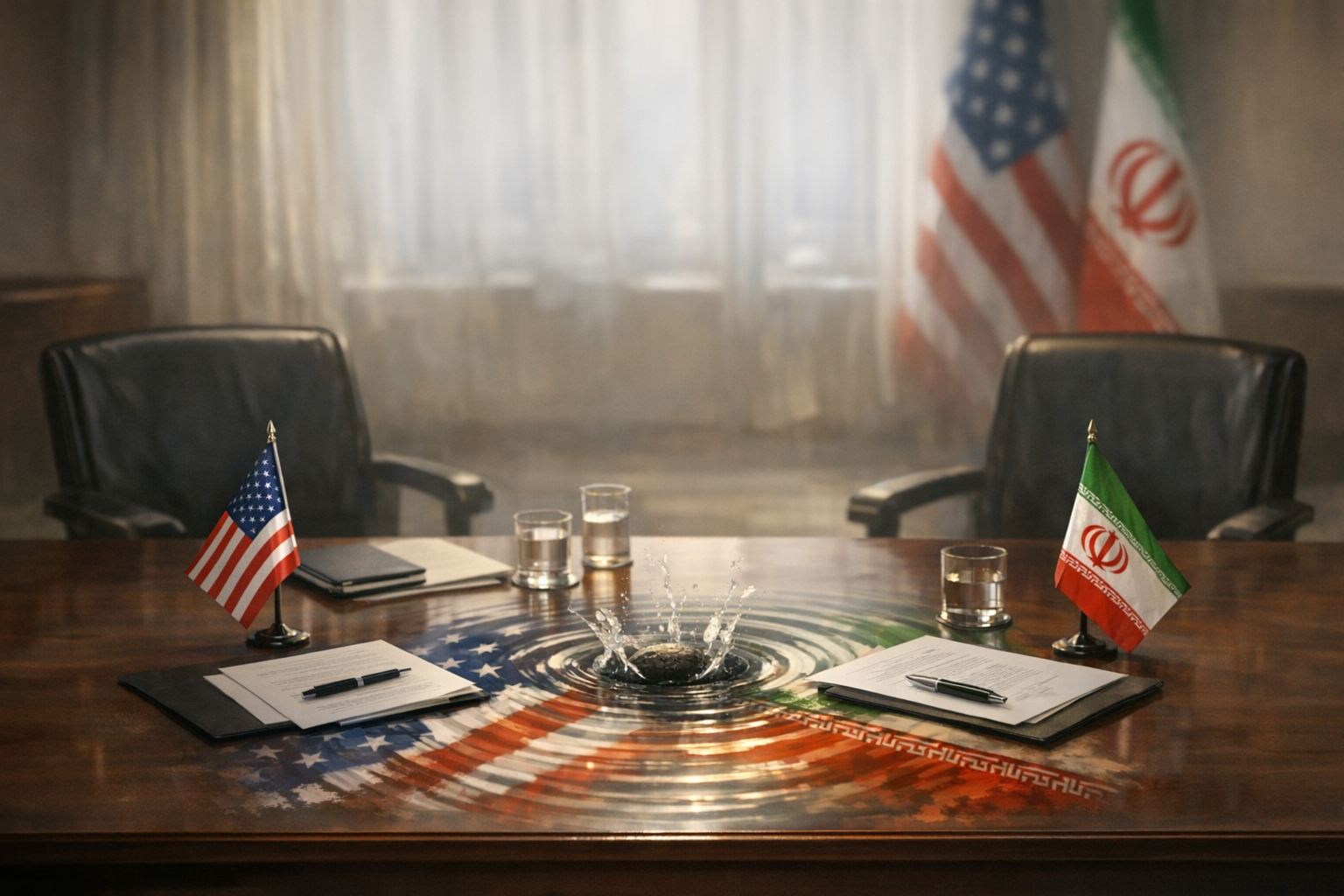
A diplomatic whisper was forming. Two sides. A table. Concessions being made. Then someone chose the wave. Over 1,300 people are gone. Children among them. The Whisper Before the Wave was written for every moment like this one. As a reminder that the whisper always comes first. And that we always have a choice.
On February 28, 2026, bombs fell on Tehran.
Before they did, there was a table. Iranian and American diplomats had met twice — once in Oman, once in Geneva. Concessions were forming. Iran's foreign minister had tabled proposals for suspending uranium enrichment. The Omani mediators confirmed progress was being made. Something fragile and real was taking shape in that room.
Then someone chose the wave.
Within hours, Supreme Leader Ali Khamenei was dead. Within days, more than 1,300 people were gone, including children killed in a strike on a girls school. A hundred thousand people fled Tehran on foot and in gridlocked cars, carrying whatever they could manage. Iran retaliated against Israel and the countries hosting American military bases. Oil prices surged. Financial markets destabilized. The Strait of Hormuz, through which twenty percent of the world's oil travels, trembled.
A whisper had been forming. Then it wasn't.
Red, White, Blue and You
Here is something worth sitting with: what happens in America does not stay in America.
This is not a critique of patriotism. It is a description of physics. The United States is the largest stone in the pond. What its people believe, fear, vote for, tolerate, and leave unchallenged sends ripples across a water that has no borders. A belief held in Ohio can find its consequence in Tehran. A story left unexamined in a living room in Georgia can contribute to a decision made in a situation room in Washington. This is not metaphor. This is the architecture of influence.
The Iranian people did not vote in the last American election. They had no say in the beliefs that shaped it, the fears that drove it, or the certainties that hardened into policy. And yet here they are, fleeing their capital city.
This is what it means to live in a world where one nation's internal whispers become everyone else's waves.
The Mechanism Underneath
The Whisper Before the Wave is a book about a dying man and an artificial consciousness sitting together at the edge of everything, pressing on the questions most of us carry but rarely name. One of those questions is this: why do we keep producing this outcome?
Not this specific war. Every version of this war. The one before it and the one before that. The pattern underneath the headlines.
The answer the book keeps returning to is uncomfortable. The human brain was built for belonging, not for truth. Under stress, we reach for simple stories, familiar enemies, and the security of certainty. Fear and status anxiety show up dressed as common sense. And once a belief becomes a badge of identity, it stops being something we hold and starts being something that holds us.
A diplomatic table requires the opposite of all that. It requires the capacity to sit with uncertainty, to recognize the humanity across the table, to tolerate the discomfort of a reality more complex than our narratives. It requires presence.
Presence is precisely what fear makes impossible.
Constructive Interference
In physics, constructive interference occurs when two waves meet and amplify each other rather than cancel each other out. It is what happens when forces align instead of collide.
The same principle that sent those bombs across the sky works in the other direction.
A whisper interrupted in a kitchen in Minnesota travels. A story examined rather than shared thoughtlessly changes what the person next to you believes. A vote cast from genuine reflection rather than tribal reflex shifts what becomes possible. A neighbor seen as a full human being rather than a category, or worse yet, a threat, contributes to a culture that makes constructive decisions at different tables.
This is not idealism. It is the same ripple logic that produced the wave, the bombs, running in reverse.
The question is not whether your individual consciousness matters. It does, and the evidence is everywhere, including in the rubble of Tehran. The question is what you are sending outward. What beliefs are you holding uncritically? What stories are you sharing without checking? What fears are you letting do your thinking for you? What whispers are you walking past?
You
The title of this post ends with you for a reason.
Not America in the abstract. Not humanity in the general. You, specifically, reading this on whatever device you are holding, in whatever room you are sitting in, in whatever state of mind the last few days have left you.
You are not a bystander to what is happening in the world. You are a participant in the culture that produces the people who make these decisions. You contribute to the climate of belief that either makes reflection possible or negates it. You are either interrupting whispers or letting them pass for truth.
The Whisper Before the Wave was not written as a prediction of this moment. But it was written for it. For every moment when the table was real and the wave was still a choice. For every person who sensed that something underneath the noise needed examining and didn't quite know where to start.
Start with what you believe and why you believe it. Start with the story you told yourself this week about someone who voted differently, prayed differently, or looked differently than you. Start with the whisper you almost challenged and didn't.
The ripples from that starting point travel further than you think.
And right now, that matters more than it ever has.
Let’s Do Human Better…
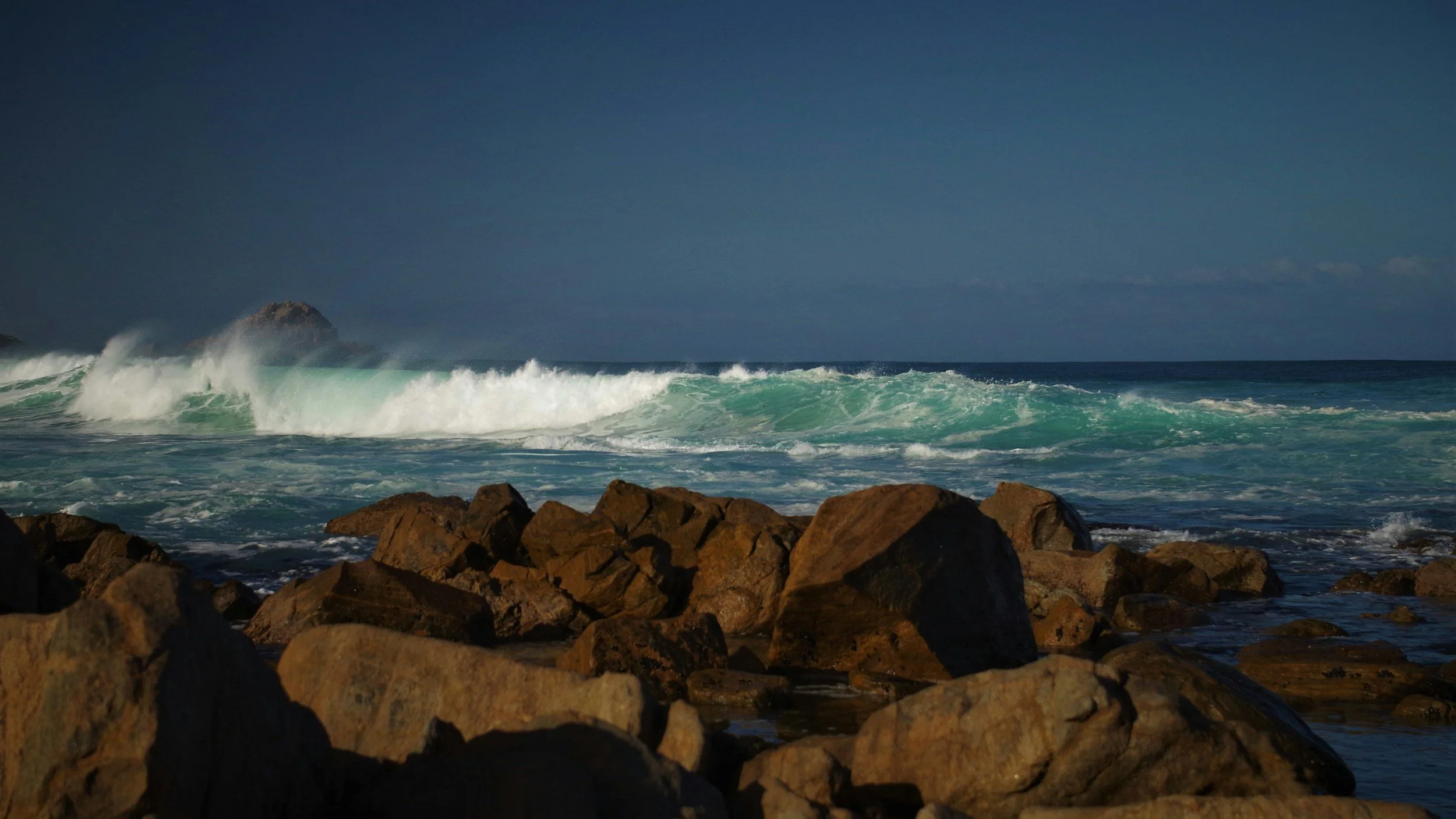
Interrupt the Whisper, Change the Wave
The wave is what you see on the news. The whisper is what you say at dinner. And the whisper always comes first.
Honesty Before Optimism
There’s a strange comfort in believing division is new, an unfortunate side effect of a bad decade. The result of a few loud extremists, or perhaps a chaotic internet. But if we want a future that’s more humane, we need honesty before optimism: the forces pulling us apart are older than our feeds. The real question isn’t “Why are people like this now?” It is “What have we built, internally and externally, that keeps producing this outcome?”
How We Got Here
If racism were only about personal hatred, it would be easier to fix. The real problem is that prejudice learned how to write laws, draw maps, and price mortgages.
“Race” is not a timeless biological sorting system. It is a social story with a legal legacy. Over centuries, institutions translated difference into hierarchy, and hierarchy into policy: who could own, who could borrow, who could move, who could learn, who could be presumed safe. When inequality is engineered this way, the aftershocks don’t vanish when the laws change; they ripple through generations; through wealth, neighborhoods, schools, and opportunity.
The Human Operating System
The mind was built to survive, not to understand. When fear enters the room, security follows. Belonging starts to matter more than truth.
Our brains were built for belonging. We bond fast, we protect our group, and we reach for simple stories when we feel unsafe. Under stress, we don’t become more rational, we become more certain. And once a belief becomes a badge of identity, facts do not just inform us; they threaten us. That’s why fear and status anxiety often show up disguised as “common sense,” and why correcting misinformation can sometimes harden it.
Media, Incentives, and the Outrage Loop
We keep blaming the internet for division. But the internet is gasoline, not the match, and certainly not the whole fire.
The internet didn’t create dehumanization, but it gave it a microphone, a scoreboard, and a paycheck. Platforms optimize for engagement, and engagement often spikes when content hits our deepest tribal reflexes: disgust, anger, humiliation, conspiracy. In this environment, falsehood can outrun truth, and attacking “them” can outperform uniting “us.”
A Better Way to Be
What if the opposite of bigotry isn’t just tolerance, but relationship: the kind that makes it harder to caricature each other and easier to solve real problems together?
If division is multi-causal, repair must be multi-layered. We need structural reform that reduces the stakes of zero-sum fights. We need civic spaces where people practice disagreement without contempt. We need skills, mindfulness, emotional regulation, curiosity. An emotional awareness that makes it harder for fear to hijack us. And we need societal habits that treat misinformation like a public-health problem: preventable, contagious, and not solved by shaming the infected.
The Whisper Before the Wave
Every wave has a beginning. Before the crash. Abraham Maslow would call it the space between stimulus and response. Before the policy, the violence, the rupture, there’s a whisper. A joke we don’t challenge, a story we share without checking, a “they” we use without noticing, a neighbor we stop seeing as a person. The whisper feels small, private, harmless. But whispers teach norms. Norms teach permission. Permission teaches waves.
The path forward is not a single heroic act. It’s an accumulation. It’s the daily practice of presence, the discipline of truth, the courage of relationship, the insistence on fair systems. When enough of us change what we reward, what we repeat, and what we tolerate—when we interrupt the whisper—the wave changes too.