
When Ideals Become Ideology
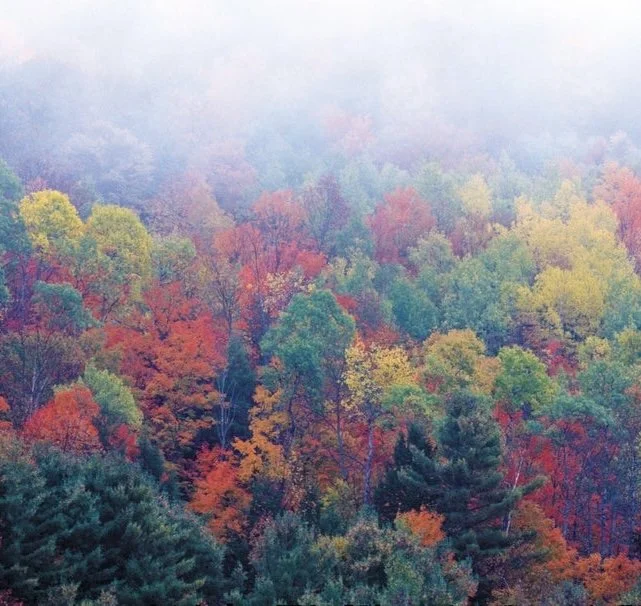
Walk into an old growth forest and you are standing inside one of the most complex cooperative systems on earth. Thousands of species occupying different niches, performing different functions, contributing different strengths. The forest does not demand uniformity. It depends on diversity. In a monoculture, every organism is the same. It is among the most fragile ecosystems in existence. One disease, one pest, one shift in conditions, and the whole thing collapses.
There is a field of study called biomimicry. The premise is simple and quietly humbling: nature has already solved most of the problems we are struggling with. Engineers study the structure of a lotus leaf to design water-repellent surfaces. Architects model ventilation systems on termite mounds. Surgeons study the hypodermic needle of a mosquito to design painless injections.
We have been borrowing from nature's blueprint for centuries.
But there is one category of human problem we have never thought to bring to nature's door. The social ones. Tribalism. Divisiveness. Intolerance. The inability to coexist with people who believe differently than we do. We treat these as uniquely human dilemmas, products of culture and politics and history. And they are all of those things.
They are also problems nature solved a very long time ago.
What the Forest Knows
Walk into an old growth forest and you are standing inside one of the most complex cooperative systems on earth. Thousands of species occupying different niches, performing different functions, contributing different strengths. The forest does not demand uniformity. It depends on diversity. In a monoculture, every organism is the same. It is among the most fragile ecosystems in existence. One disease, one pest, one shift in conditions, and the whole thing collapses.
A healthy forest thrives precisely because its inhabitants are different from each other.
This is not idealism nor metaphor. It is a description of how resilient systems actually work. And it is the direct opposite of what ideology demands.
Ideology can and often does morph into monoculture of the mind. It does not ask questions. It provides certainty defined through a particular lens. It offers belonging in exchange for compliance. And like all monocultures, it carries within it the conditions of its own fragility. Because a system that cannot tolerate difference cannot adapt, and a system that cannot adapt is prone to failure and eventually obsolescence.
Ideals are something else entirely. Ideals in their purest sense are shared humanity personified. Their shared objectives make cooperation over competition, commonality over difference, not only possible but necessary. Contribution. Healthy planet. Safe children. Dignity in old age. A world worth leaving behind. These are not partisan positions. They are the ecosystem goals that every organism in the forest, be it of wood or flesh, depends upon, regardless of its niche.
The shift from ideals to ideology is the shift from the forest to the tree, as in monoculture. From cooperation to domination. From asking what we need together to demanding that everyone become the same.
The Biology Underneath
Here is something worth considering―the tribalism tearing societies apart right now is not a moral failure at its root. It is a biological one.
The human brain contains a structure called the amygdala, the brain's threat-detection center. In the ancestral environment, a stranger was statistically dangerous. The amygdala learned to fire in the presence of the unfamiliar, flooding the body with the chemistry of defense. That response kept our ancestors alive on the savanna.
In the digital age, the amygdala cannot tell the difference between a physical threat and a political one. It responds to a threatening tweet the same way it responds to a predator. And a brain in threat response does not reason. It categorizes. It reaches for the tribal, the told story, the trusted group, the certain answer.
Self-righteousness is not confidence. It is the amygdala doing its ancient job in a world it was never designed for. Knowing this is one thing. Relating to it is another. Why do people feel so threatened? The answer lies in security, or more accurately, lack thereof.
The Peer Instinct, Reclaimed
Biologists describe what they call the peer instinct — the deep human drive to belong, to fit in, to align with the group. This instinct is the engine of tribalism when it is captured by fear and ideology. But it is also the engine of every social movement that has ever shifted a culture toward something better.
The peer instinct does not care what the group norm is. It simply wants to belong to one. Which means the question is not how to eliminate tribalism but how to redirect it. What does it mean to fit in? What does the group reward? What gets you belonging and what gets you excluded?
When the norm shifts from protecting the bubble to being curious about what lies outside it, the same biological machinery that divides us can begin to connect us. The forest does not eliminate competition. It channels it into a system where every organism's thriving contributes to the whole.
The Whisper Underneath the Ideology
In The Whisper Before the Wave, Almega asks the old man to consider what remains when the noise of ego is set aside. Not what you have been told to believe. Not what your group requires of you. What you actually know, in the oldest and quietest part of yourself, to be true.
That knowledge is where ideals live. Before they are captured by ideology. Before belonging requires compliance. Before the forest becomes a monoculture.
Every tradition worth preserving began as an ideal. A reach toward something genuinely good. Somewhere along the way, the ideal hardened into an identity, the identity into a tribe, the tribe into a wall. That is not inevitable. It is a pattern. And patterns, once seen, can be interrupted.
Nature has been interrupting that pattern for four billion years. The forest does not hold grudges. It does not demand that the oak become the elm. It simply keeps growing toward the light, making room for everything that contributes to the whole, releasing what no longer serves.
We could learn something from the forest.
We could remember what we were reaching for before we started defending it.
Let's Do Human Better.

How U.S. Politics Became Religion
"Politics did not become religion overnight. People did not start viewing someone with an opposing political view as a sinner overnight. Canyons are not carved overnight. Look at a river cutting through stone and you see something that took ten thousand years of pressure, patiently persisting. A drop is nothing. A million drops, over time, reshape the landscape entirely. What we are living inside today is the canyon. But the drops have been falling for a long time."
I remember the moment I felt it.
Not the moment it began, that was long before any of us noticed. But the moment I felt something shift inside me that I didn't recognize. It was during the 2015 campaign season, watching a man I had never encountered in politics say things from a podium that I had been taught, since childhood, that decent people simply did not say. And millions of people were cheering.
I felt something I had never quite felt before. Something hot and certain and righteous.
I felt hate.
Not toward his supporters. Toward him. And the hate scared me more than he did, because I knew what it meant. It meant it had gotten inside me. It meant I had become, in my own small way, exactly what I was reacting against. Certain. Tribal. Closed.
That recognition is where the book The Whisper Before the Wave began. And it is where this post begins too.
The Drops That Carved the Canyon
Politics did not become religion overnight. People did not start viewing someone with an opposing political view as a sinner overnight. Canyons are not curved overnight.
Look at a river cutting through stone and you see something that took ten thousand years of pressure, patiently persisting. A drop is nothing. A million drops, over time, reshape the landscape entirely. What we are living inside today is the canyon. But the drops have been falling for a long time.
The first drop most historians point to landed in the late 1970s, when Jerry Falwell Sr. and the Moral Majority began organizing evangelical Christians as a political bloc. Faith and political identity began to fuse. To be a good Christian started to mean voting a certain way. The personal and the political began their long marriage.
The second drop fell in the 1990s. The Speaker of the House of Representatives at the time, Newt Gingrich, systematically introduced the language of warfare into political discourse. Opponents became enemies. Compromise became betrayal. Priorities shifted from governing to winning, and winning required a villain. The culture of contempt that now defines Washington did not arrive fully formed. It was taught deliberately over time, as strategy.
Then came September 11, 2001. Fear does something specific to the human brain. In fight or flight fashion, it looks for shortcuts. It reaches for the comfort of certainty and the safety of the group. In the years that followed, the American identity hardened around an axis of us and them in ways that never fully softened. Security became the organizing principle of public life, and security, by definition, requires a threat.
And then the phone arrived in everyone's pocket. Social media did not create division. But it gave it a microphone, a scoreboard, and a financial incentive. Algorithms learned that outrage travels faster than nuance. That threat activates faster than hope. That the most profitable version of you is the most frightened version of you. The drops became a flood.
The People Inside the Canyon
Here is what I want to say carefully, because it matters more than anything else in this post.
The people on both sides of this divide are not, at their core, villains.
They are anxious, fearful.
A retired factory worker in Pennsylvania who feels the world he built his identity around has been taken from him without his consent is not a monster. He is a human being whose sense of belonging and purpose is under threat. And a threatened brain reaches for familiar stories and accustomed enemies because that is what threatened brains have always done. While it kept our ancestors alive on the savanna, it is tearing us apart in the digital age.
This does not excuse what fear produces. It explains it. And explanation is where the possibility of repair begins.
“Sit with almost anyone long enough, past the labels and the defenses, and something else emerges. Fear. Longing. Old wounds. Love for their children. Confusion about a world that keeps changing.” —Excerpt from: The Whisper before the Wave
Growth Is Not a Straight Line
I want to be honest about something. There is a version of this post that ends in a well thought out observation, a five step path back to civic health. But I am not going to write that post. Because straight lines are exceedingly rare in nature and the path back from where we are will not be straight either.
A seed does not grow upward without first pushing through darkness. A bone heals stronger at the fracture point, but only after the pain of breaking. The river does not carve the canyon in a single purposeful rush. It meanders. It doubles back. It finds the path of least resistance and follows it until the landscape is transformed.
We will have days that feel like regression. Moments when the wave crashes harder than the one before it. Elections that feel like steps backward, regardless of your political persuasion. They are part of the process, not evidence that the process has failed.
What matters is the direction of the collective drops. Are they flowing towards common good, in a direction that benefits our shared humanity? Or, in a different direction?
The Whisper Available to You
In The Whisper Before the Wave, there is a dying man sitting by a fire, finally still enough to hear what has been underneath the noise his whole life. Clarity. A quality of attention. The willingness to sit with what is true rather than what is comfortable.
That quality of attention is what politics as religion forfeits. Religion, at its worst, does not ask questions. It depicts certainty. It offers belonging in exchange for compliance. It makes doubt a form of disloyalty. Religion at its best is a collective expression of grace, compassion, acceptance. Two sides of the same coin.
Presence transcends the duality of religion and politics. It asks you to hold complexity without resolving it on the spot. To see the anxious human being inside the political enemy. To notice when your own certainty is fear in disguise. To ask, honestly, what whispers you are walking past because examining them might impinge upon your beliefs.
My kryptonite taught me what I was capable of becoming. And not in a good way. The book is my answer to that lesson. My small drop in a very large body of water. My nudge of the pendulum back toward something better.
I no longer feel hatred towards that man on the podium in 2015. I feel understanding...for how far outside social mores one can exist when operating out of ego. And I feel empathy…for I know one can never know inner peace when operating out of ego.
You have a drop too. A conversation you could have differently. A story you could examine before you share it. A neighbor you could see as a normal human being rather than a sinner of opposing beliefs. A moment of genuine open-mindedness where contempt would have been easier.
Drops become rivers. Rivers carve canyons. And canyons, eventually, become the landscape everyone lives inside.
Be mindful of where your drops land.
“Water does not resist its becoming. It rises from sea to sky, not by force, by warmth. It forms clouds, not to dominate, to rise above. It falls as rain, not in punishment, in offering. When it touches the earth, it nourishes. And when it is still, it reflects.” – Excerpt from: The Whisper Before the Wave
Let's Do Human Better. :)